13.00 Uhr
Rundgang
Share


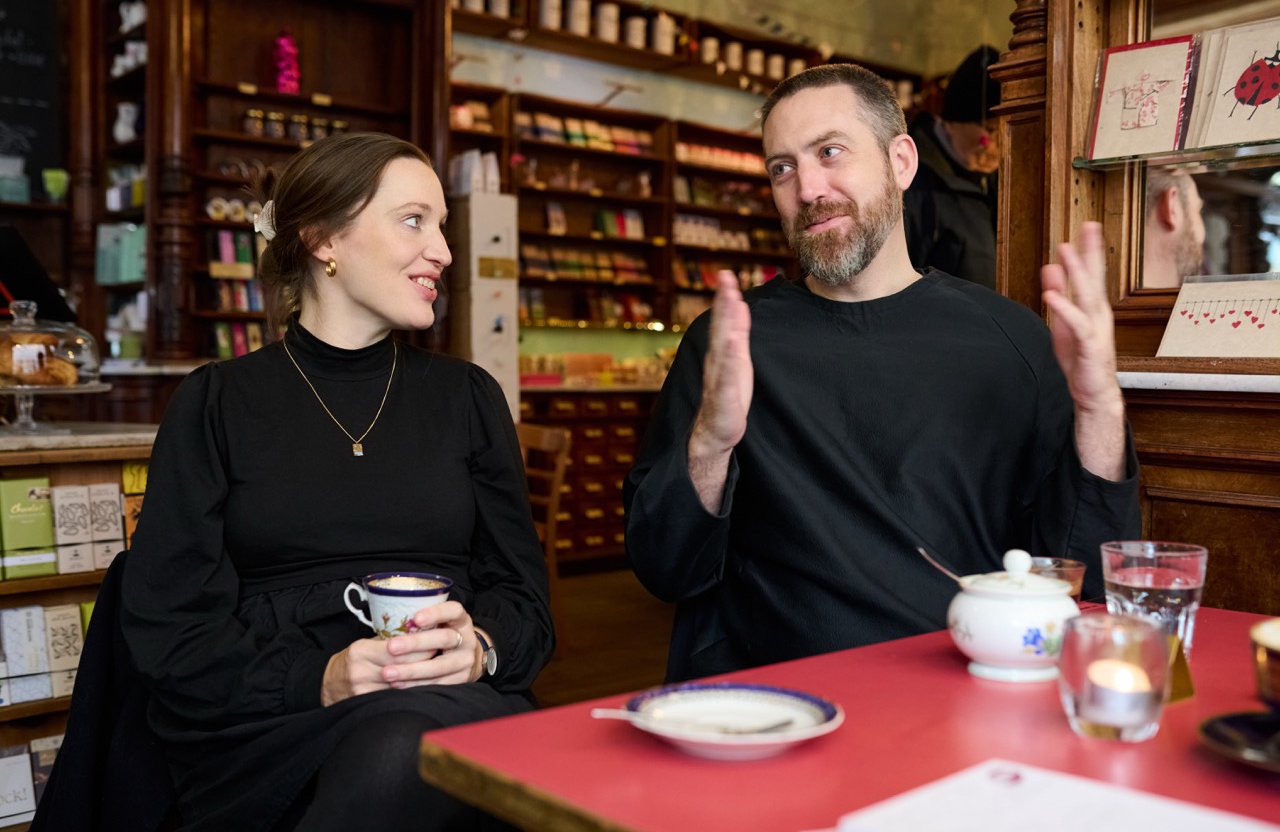 Elina Albach & Liam Byrne (Ensemble CONTINUUM) © Andreas Antoni
Before they come to us, we visit them in their neighbourhoods: the musicians of our new series “Tracks - Music of the City at the Konzerthaus”. Ensemble CONTINUUM and their guests from Frames Percussion will kick things off on November 14 & 15.
With harpsichordist Elina Albach, who was born and raised in West Berlin, and London-trained viola da gamba player Liam Byrne, who has been living in Berlin since 2017, we met up in Schöneberg between Nollendorfplatz and Winterfeldt neighbourhood.
On a Wednesday under gray October skies, the Winterfeldtmarkt is nowhere near as busy as it is on Saturdays, when half of Schöneberg gathers to browse Brandenburg greens, Middle Eastern tapas, alpaca wool hats, and Italian desserts. Walking by, harpsichordist Elina Albach recommends pumpkins and apples here, points to large bowls in a glass display there: “This tiramisu is the very best.” The market is part of her Schöneberg – like her favorite vegan Chinese restaurant or the well-known craft store a few blocks away. As a child in the 1990s, she used to pick out decorations for her birthday parties there, now she comes with her little son. The chocolate café where the musician takes us still has its original furnishings from the 19th century and used to be a pharmacy.
Elina Albach's home is not only in West Berlin, where she grew up and still lives today: “When I was 14 or 15, I started playing a lot of chamber music with students from the Bach Gymnasium [the former East Berlin special school for music in Mitte]. Soon I was constantly out and about in the city, at Hanns Eisler, at Kotti, or at the Spree near Radialsystem, where there was still a lot of undeveloped land. There was an incredible feeling of freedom back then.”
At 18, she went to study at the conservatory in “neat and tidy” Basel: “I missed Berlin so much that I moved back while I was still studying. Whenever I got off the subway, I would take a deep breath and think, this is the smell I've been missing – now I'm home.”
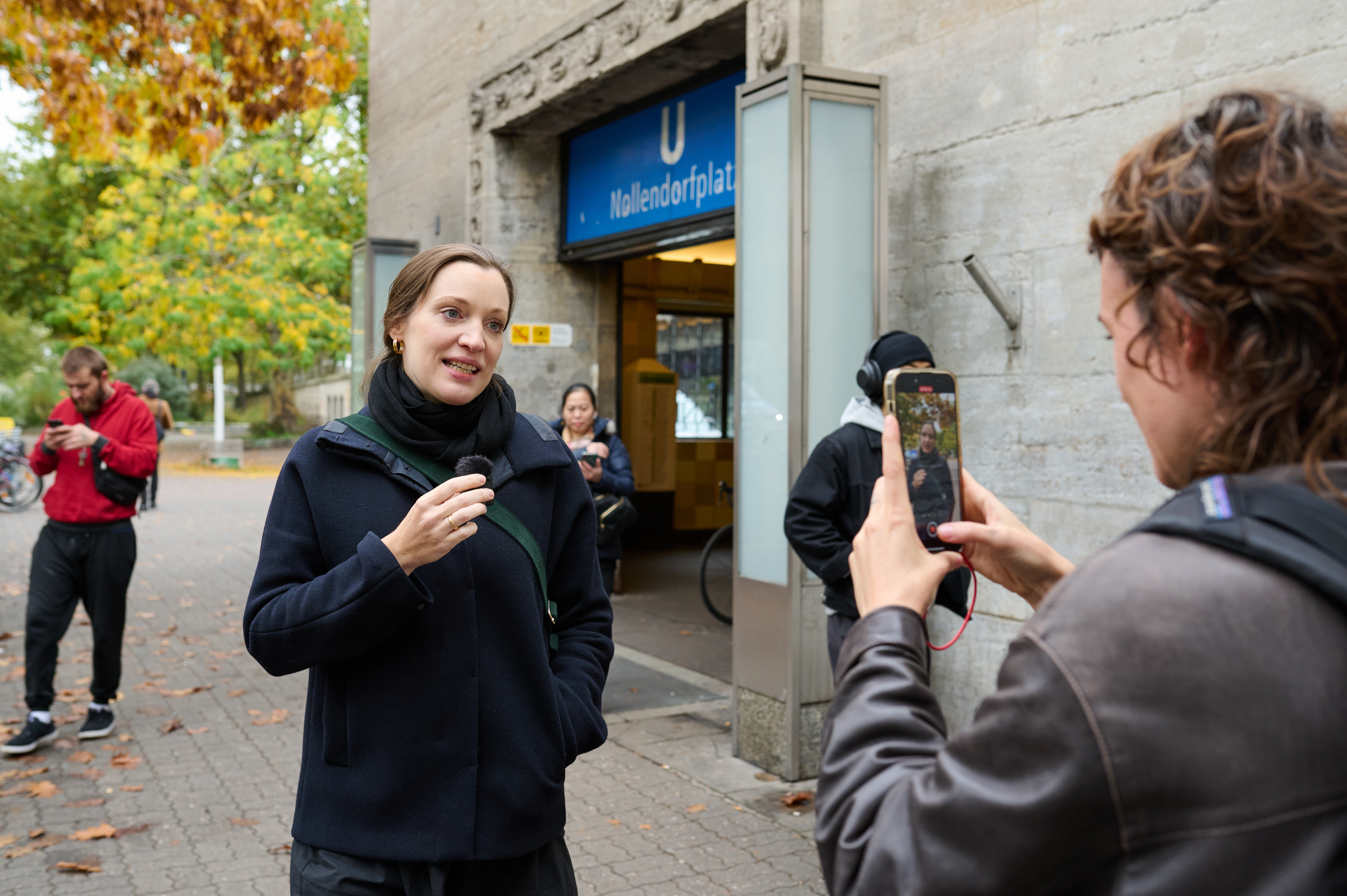
Back in the city and having recently moved to Schöneberg, Elina began playing with the highly sought-after Solistenensemble Kaleidoskop in 2011—an enormously formative experience: “That was my very first contact with contemporary music. Their way of thinking about music and concerts was different from anything I had done before and typically Berlin at that time. Rehearsals took place in random locations. I even carried my harpsichord up to the seventh floor once. There were rooftop concerts until the police came, neighborhood operas in a construction trailer at Wilde Renate or under the open sky. Especially after having finished conservatory, when I wanted to try out a lot of things, there were many of these inspiring places. The city was a giant playground for us. I look back on that with nostalgia today, but on the other hand, my life has changed so much since then that much of it would no longer fit in.”
As a student in London, Liam Byrne dreamed of living in Berlin one day. Eight years ago, that dream became reality. What distinguishes the two cities from the perspective of a freelance classical musician today?
“The 2008 financial crisis changed a lot in London. It was an important starting point for the emergence of a certain classical and underground scene, in which people collectively built something truly new. The major venues responded quickly by opening their doors to it.
What I particularly like about Berlin is the openness in how time is used here. This creates a certain energy in the city, a flexibility. Music is incredibly to connected to time. The feeling that I can shape time according to my own wishes and needs is musically important to me. I think it's great that there is not only a professional scene here, but also a purely artistic one. Many people live in Berlin because of the quality of life and the cost of living, and then travel from here to their concerts and ensembles. In Berlin, you meet people and build connections. There are still many opportunities to play house concerts and similar events. I still find this unstructured music-making in between, this experimentation, very important. In my opinion, it doesn't cost that much to enable artists to work in a good situation. And the results are huge. My own practice has developed dramatically since I moved to Berlin. I was successful in London, but I was always exhausted. I worked enormously hard and at the end of the day I hardly had enough money to pay the rent.”
Elina is certain that without an artistic scene, Berlin would not have developed in the same way over the last 30 years: “Whether it's music, visual arts, or club culture—culture is what defines this city. And by that I don't just mean high culture, but everything that takes place in apartments, basements, anywhere. That's why I'm so annoyed about the budget debate. The weather here is certainly not the reason why so many visitors come here.”
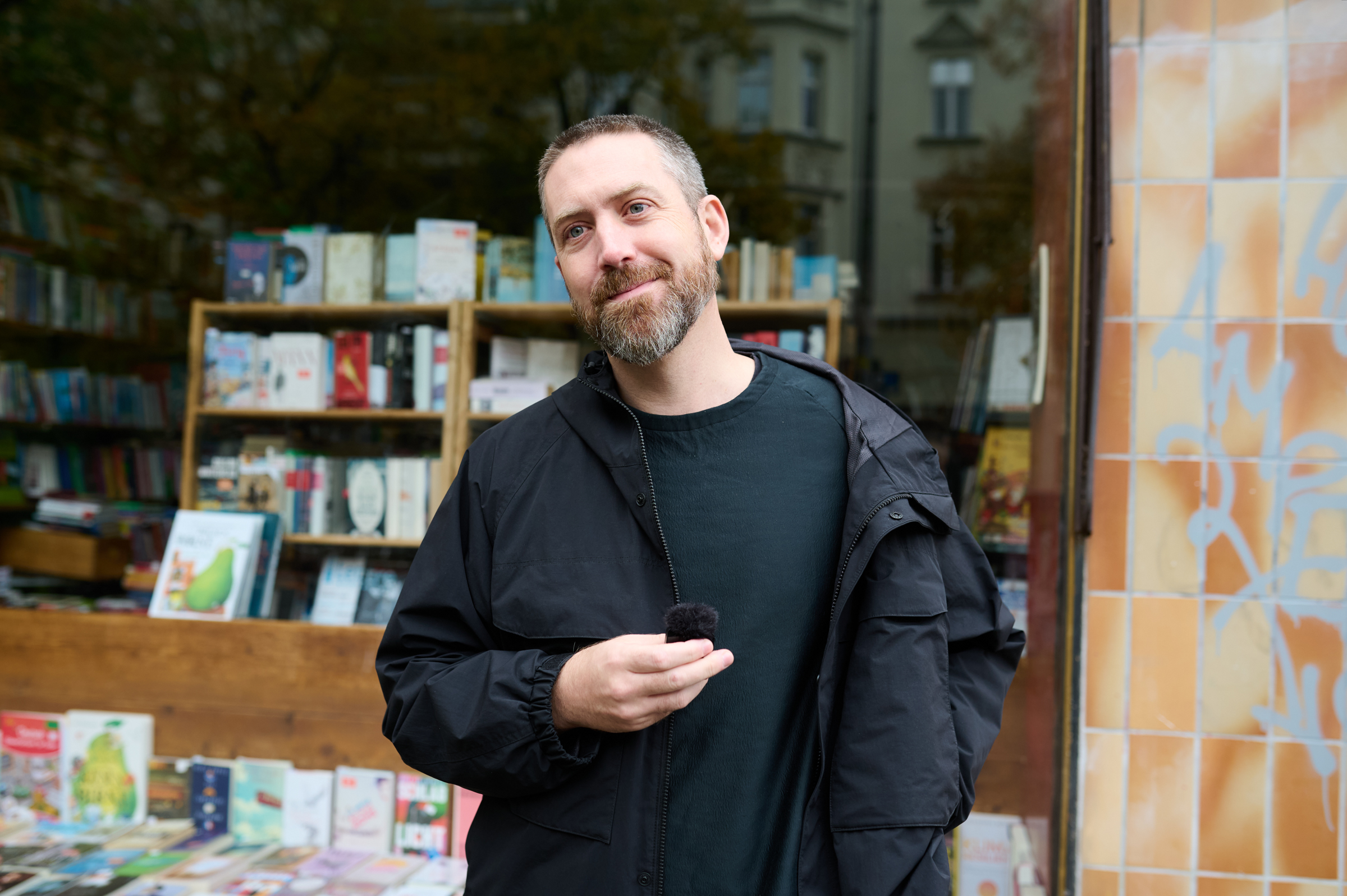
How does collaboration work at Ensemble CONTINUUM? “There is a core group of musicians and singers, many of whom live in Berlin. They are always involved, but no one is permanently employed. For example, someone who plays Bach fantastically but doesn't like Steve Reich so much simply sits out that project. That creates a pleasant flexibility,” says Elina, the artistic director, describing the organization. “This time, there are quite a few of us involved, especially since Frames Percussion from Barcelona is also participating. They were awarded the Ernst von Siemens Music Prize last year. Ever since I met them at a concert, I've been eager to collaborate with them. Just like Berlin, their hometown has a reputation for being very open and attracting many exciting artists. These vibes connect us!”
Elina Albach and Liam Byrne have also identified musical connections between the American composer Steve Reich and the composer Chiara Margarita Cozzolani, a 17th-century Benedictine nun from Milan.
“I find it interesting that the rhythms in Steve Reich's work, as in Cozzolani's, are very much inspired by the texts of the psalms used in each case. In his psalm settings ‘Tehilim,’ Reich explored his family's Jewish tradition. There is no living musical tradition associated with these texts, and he wrote that this was precisely why he chose them,” Liam explains. “In 2019, I had the honor of meeting him. He told me that his original idea was to have the string parts played on viols. But for logistical reasons, this was never possible. Until now!”
In the beginning, Sister Cozzolani's biography does not sound too unusual at first, having been sent to a convent by her family as a young girl: "And she couldn't leave. However, many women in this situation began to make music. Although Cozzolani is little known today, she became very successful at the time as one of the few nuns who composed music and had her pieces published. For me, her music is comparable to that of Monteverdi. However, less of her work has survived,“ summarizes Elina Albach. “There is of course a big contrast between the works of Reich and Cozzolani. But since we use similar instruments for both styles, I believe that a pull can be created that runs through the entire concert, so that at some point you no longer think in terms of old and new." In addition, Berlin composer, jazz musician, and drummer Max Andrzejewski has written short transitions between the pieces: “He is one of the most interesting people in the Berlin music scene for us and is particularly good at connecting different worlds.”