13.00 Uhr
Rundgang
Share


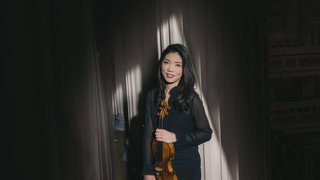
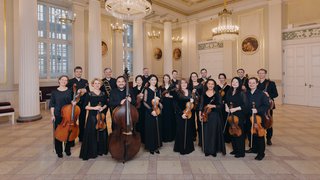
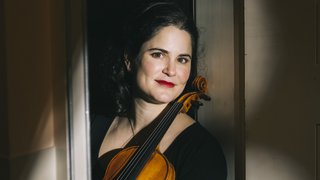
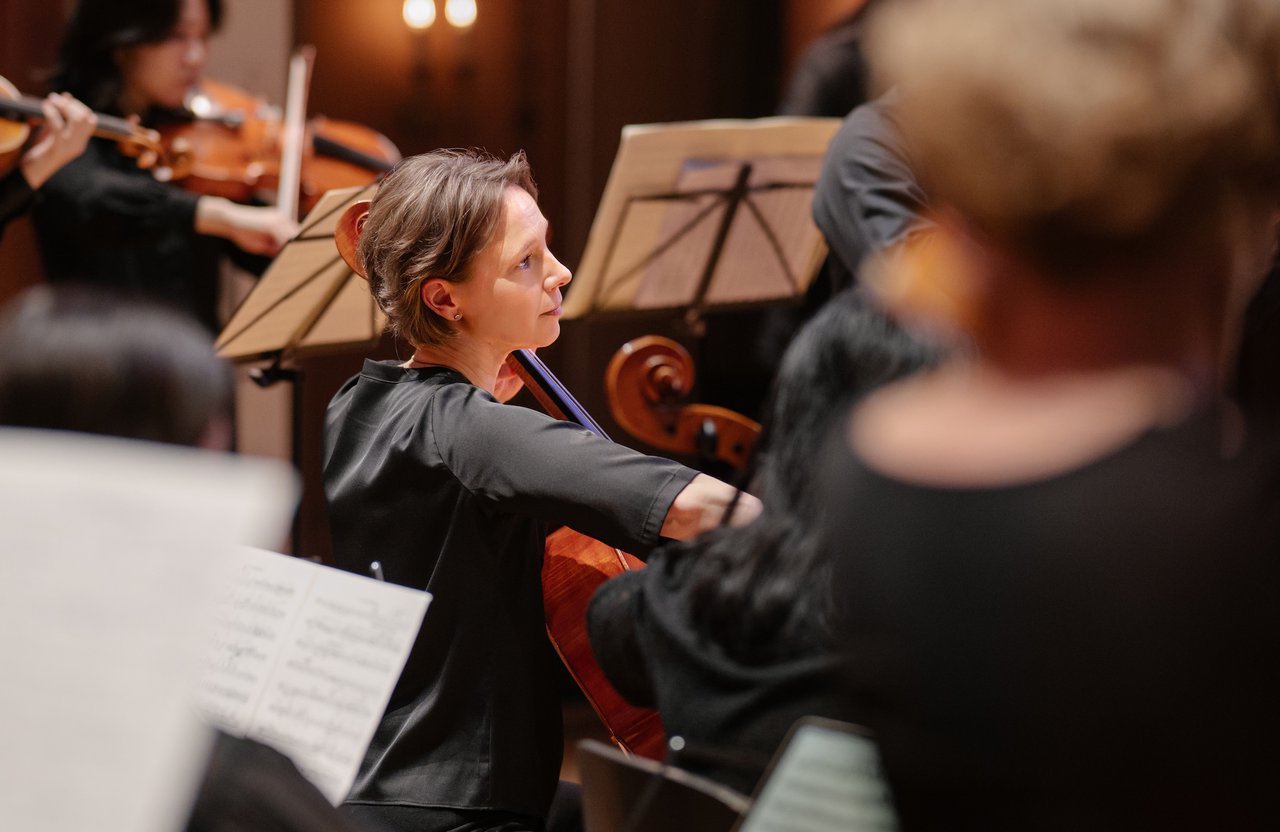 Konzerthaus Kammerorchester, Viola Bayer © Simon Pauly
Music can be experienced individually and directly through the body. At the same time, it possesses an enormous power to foster connection and community. We asked around in the Konzerthausorchester about this season’s theme and learned that playing chamber music brings both of these elements together in a profound way for our musicians—whether in the Konzerthaus Kammerorchester, the Horenstein Ensemble, or in various ensembles that come together for individual concerts throughout the season, totaling 11 concerts.
“The transition from the physical—feeling the sounds of the double basses in your gut—to the sensation that wells up when the violins play a truly beautiful cantilena is seamless. My own instrument can’t do that, and it enriches me greatly when I experience it while listening to the orchestra,” says cellist Viola Bayer, who serves on the board of the Konzerthaus Kammerorchester.
“My ideal situation in chamber music is to understand one another without words, through music alone. At the beginning, of course, you need to use your head first: I have to focus on my cello part. Then we clarify our ideas together and agree on how something will be played. When everyone eventually flows together and our parts interlock so that everyone immediately senses what the others are trying to say, it’s wonderful. I love string quartets and sextets—for me, that’s exactly the right ensemble size.”
A rehearsal period with the Konzerthaus Kammerorchester is always both a joy and a challenge for her: “The more of us who are involved, the more important it becomes to clarify and standardize many things in advance. That’s why we have our artistic director, Sayako Kusaka, or a guest concertmaster. During a rehearsal, 23 string players can’t all discuss Strauss’s *Metamorphoses*. In that sense, a chamber orchestra comes closer to a symphony orchestra, where the conductor brings their ideas to life. But it remains an ensemble—we have the opportunity to connect musically and find a common language. The feeling is very special when we play as a cello ensemble within the section. We’re so familiar with each other’s playing, the instruments, and our shared sound that it’s the easiest thing in the world to find each other.”
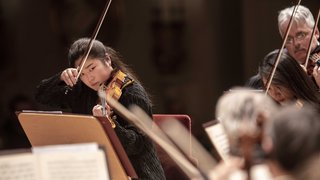
The Konzerthaus Kammerorchester will perform four concerts this season—the first on September 17, conducted by our first concertmaster, Suyoen Kim, and the second on December 3, conducted by her colleague Sayako Kusaka, who also serves as the KHKO’s Artistic Director.
Suyoen Kim during a chamber music rehearsal at the Konzerthaus; Sayako Kusaka with the Konzerthaus Kammerorchester (c) Simon Pauly
Our oldest Konzerthaus ensemble is virtually one of a kind and loves making music together with a special kind of flexibility: Every concert features works for different instrumentations.
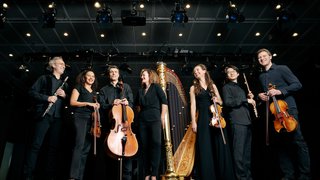
“They say a string quartet is like a marriage. If that’s true, then we’re polyamorous—there are seven of us in the Horenstein Ensemble. That’s Berlin,” says harpist Ronith Mues with a laugh. “The way we are, it all fits together wonderfully: Jana Krämer-Forster, Matthias Benker, and Andreas Timm on violin, viola, and cello, our clarinetist Ralf Forster, and I have been with the ensemble for nearly twenty years. So we practically started out in the sandbox together. Johanna Pichlmair on first violin and Yuan Yu on flute are now our regular guests. We’ve had the pleasure of playing with many wonderful musicians in these roles. For individual pieces, we’ve also invited additional guests, such as one of our percussionists.
For me, chamber music is almost the supreme discipline. You have to play continuously—which isn’t a given for a harpist in an orchestra. You sit close together, interact constantly, breathe in unison, and immediately sense how the energy begins to flow between you.
An ensemble offers additional layers of ‘quality assurance’—both technically and sonically—compared to orchestral performance. In our rehearsals, this involves discussing, experimenting, and questioning until we arrive at our shared interpretation. No one just says, ‘This is how it’s done, and that’s that.’”
The Horenstein Ensemble will perform its next concert at the Konzerthaus Berlin on December 11.
Horenstein Ensemble (c) Simon Pauly
mit Streichquartetten von Emilie Mayer und Felix Mendelssohn Bartholdy
Emilie Mayer
Streichquartett e-Moll
Pause
Felix Mendelssohn Bartholdy
Streichquartett f-Moll op. 80
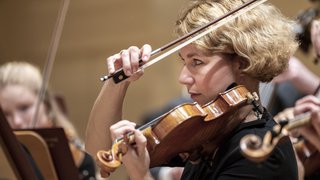
mit dem Horenstein Ensemble
Germaine Tailleferre
Sonate für Harfe
André Caplet
„Conte fantastique“ für Harfe und Streichquartett (nach der Erzählung „Die Maske des roten Todes“ von Edgar Allan Poe)
Pause
Carl Maria von Weber
Klarinettenquintett B-Dur op. 34
Pjotr Tschaikowsky
Trepak, "Tanz der Zuckerfee" und "Blumenwalzer" aus dem Ballett „Der Nußknacker“ op. 71, für Kammerensemble bearbeitet von Felix Korinth
mit Werken für Trompete, Streicher und Klavier
mit Werken von Clara Schumann, Paul Dukas, Fryderyk Chopin und Johannes Brahms
Clara Schumann
Drei Romanzen für Violine und Klavier op. 22
Paul Dukas
„Villanelle“ für Horn und Klavier
Fryderyk Chopin
Ballade f-Moll op. 52
Pause
Johannes Brahms
Trio für Horn, Violine und Klavier Es-Dur op. 40
mit Werken von Johann Sebastian Bach, Kaija Saariaho, Jiří Družecký und Jean Françaix
im Rahmen der Initiative „Orchester des Wandels“
Sofia Gubaidulina
„Allegro rustico / Klänge des Waldes“ für Flöte und Klavier
Heinrich Ignaz Franz von Biber
„Sonata Representativa“ für Violine und Basso continuo
Mason Bates
„The Life of Birds“ für Flöte, Klarinette, Violine und Violoncello
Antonín Dvořák
„Waldesruh" für Violoncello und Klavier Des-Dur op. 68 Nr. 5
Pause
Benjamin Britten
„Pan" aus den Sechs Metamorphosen nach Ovid op. 49
Jean Françaix
Quartett für Flöte, Oboe, Klarinette und Fagott
Francis Poulenc
Trio für Oboe, Fagott und Klavier
mit Werken von Richard Strauss, Ludwig van Beethoven und Franz Schubert
Richard Strauss/Franz Hasenöhrl
„Till Eulenspiegel einmal anders!“ – Grotesque musicale für Violine, Klarinette, Horn, Fagott und Kontrabass
Ludwig van Beethoven
Streichquartett f-Moll op. 95
Pause
Franz Schubert
Oktett F-Dur op. post. 166 D 803
mit dem Konzerthaus Quartett Berlin
mit Werken von Edvard Grieg und Pjotr Tschaikowsky
Edvard Grieg
„Aus Holbergs Zeit“ – Suite für Streichorchester G-Dur op. 40
Pjotr Tschaikowsky
Drei Stücke für Violine und Klavier op. 42 („Souvenir d'un lieu cher“), für Violine und Streichorchester bearbeitet von Alexandru Lascae
Pause
Pjotr Tschaikowsky
Serenade für Streichorchester C-Dur op. 48
mit einem Streichquintett von Georges Onslow und Franz Schuberts „Forellen-Quintett“
George Onslow
Streichquintett e-Moll op. 74
Pause
Franz Schubert
Klavierquintett A-Dur op. 114 D 667 („Forellen-Quintett“)
mit Werken von Frank Bridge, Ernst von Dohnány und Robert Schumann
Frank Bridge
„Phantasy“ für Klavierquartett fis-Moll
Ernst von Dohnányi
Serenade für Streichtrio C-Dur op. 10
Pause
Robert Schumann
Klavierquartett Es-Dur op. 47