13.00 Uhr
Rundgang
Share


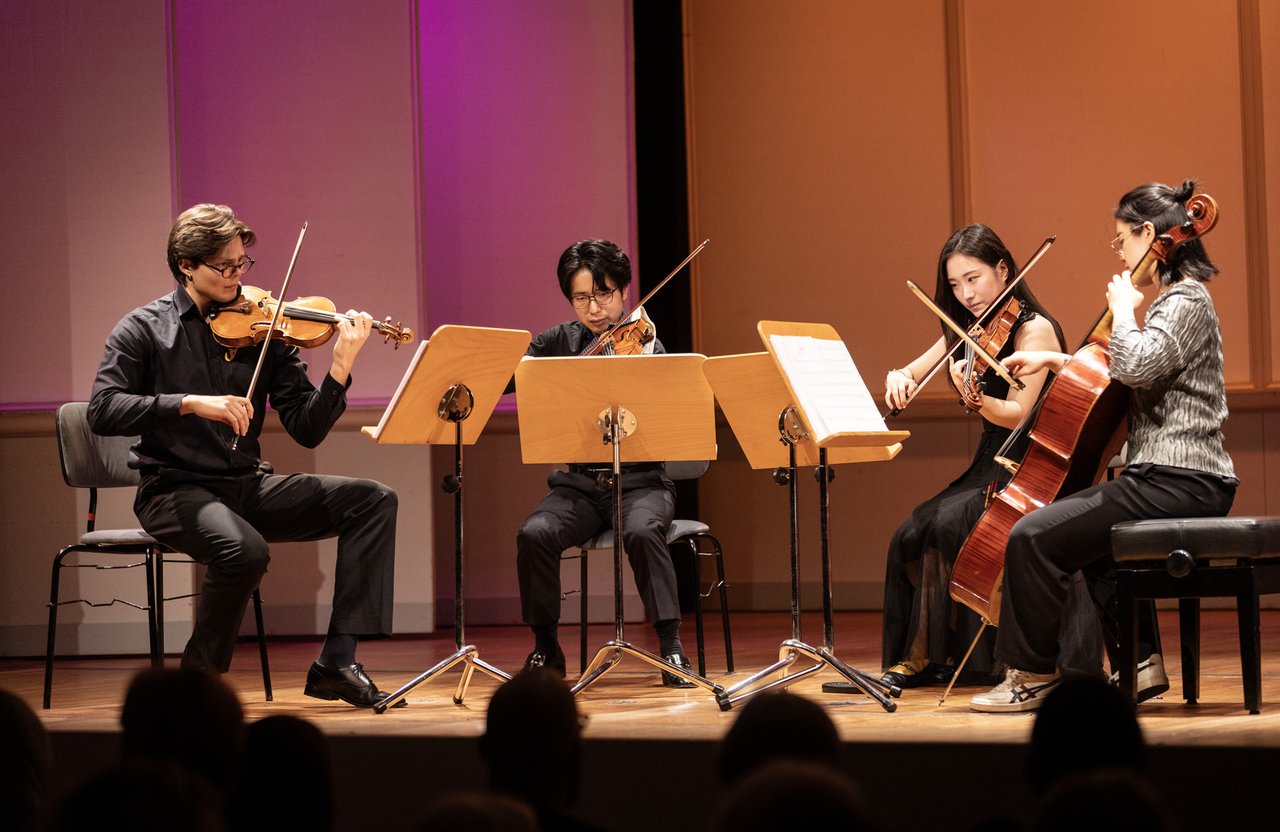 Musikerinnen & Musiker der Orchesterakademie am Tag der offenen Tür © Pablo Castagnola
On weekends without rehearsals, violist Jaeyoung Kim likes to sleep in on Saturdays and enjoy a quiet day. On Sundays, he goes to church. Music runs in his family: “Because my father and my older brother play the cello, I wanted to make music, too. And because I wanted to attend Arts middle school, I decided on the viola.”
The Korean musician generally likes the composers he’s playing, but especially Brahms and Bach. An alternative to the viola for him would be singing: “There are bass arias that I like.” In another life, he might be a chef, because he loves to cook well for himself and others. His favourite dish is pork kimchi jjim: “ If I feel like I want to go back to Korea, I always cook it for me.” Jaeyoung collects candles: “At first, I bought them just to light after cooking, but now I’ve come to really like the scent itself.”
Violinist Noah Klein loves Berlin, but he’s also happy when he “gets out of the city for a change on the weekends, preferably into nature.” His favourite spot in Berlin dates back to the COVID-19 pandemic, when he first lived in the city: “Back then, I moved near the Schwedter Steg and walked along it a lot. I still have a special connection to that place today.”
With parents who studied music, it was only natural that Noah would learn an instrument as well: “A long time ago, my mother bought a rather beat-up violin at a flea market, and as a three-year-old, I was passionately trying it out —albeit in a cello position.”
He could “listen forever” to Bach, Tchaikovsky, and the Mendelssohn siblings, as well as Schnittke and Weill, and has “great respect for female composers like Emilie Mayer or Louise Farrenc, who had to prove themselves to societal opponents through their talent alone.”
In the final movement of Mahler’s Sixth, Noah would love to exchange his violin for the “Mahler hammer” once in a while. In an alternate life, this musician—who has a particular interest in education and social issues—would “probably have become a teacher of philosophy and politics.” He owns a collection of “underused outdoor gear and unread books.” What makes him happy is “really good tomato sauce with pasta.”
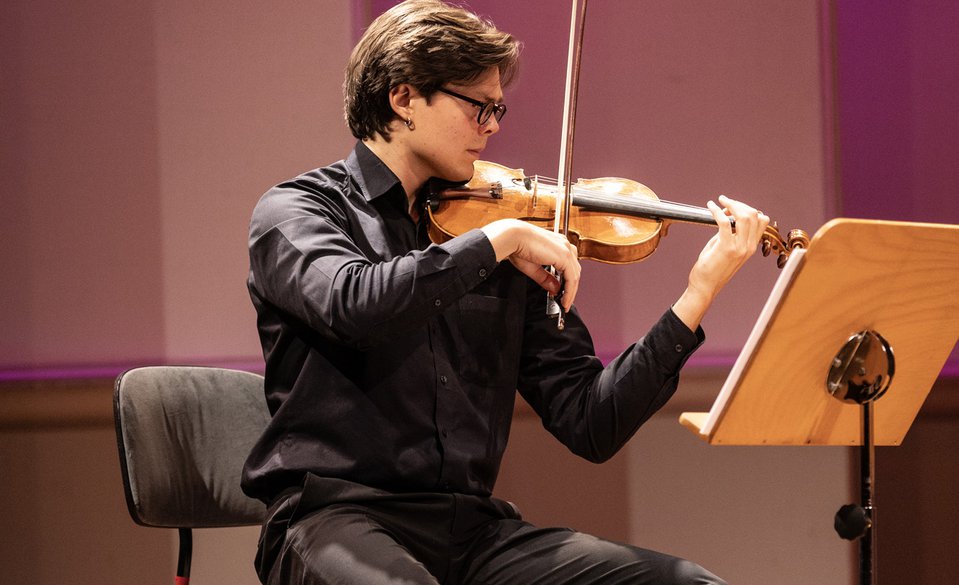
At the open house in Oktober 2026, Noah Klein plays film music with a string quartet of the Academy (c) Pablo Castagnola
Double bassist Jiwoo Ryu’s favourite place in Berlin is his home. He explains that he discovered the double bass because of his strong aversion to studying for school: “My dad eventually couldn't watch me like that anymore and recommended to learn an instrument. That's how I started. And somehow, it brought me all the way to Germany..!”
The Korean musician’s favourite composer is Richard Strauss, and if he had to choose another instrument, it would be the oboe: “I just absolutely love its sound.” He’d be interested in becoming a psychiatrist as an alternative career, but he thinks that studying for it might not work out so well after all for him. Jiwoo collects electronic gadgets and “really loves Japanese and Chinese food.”
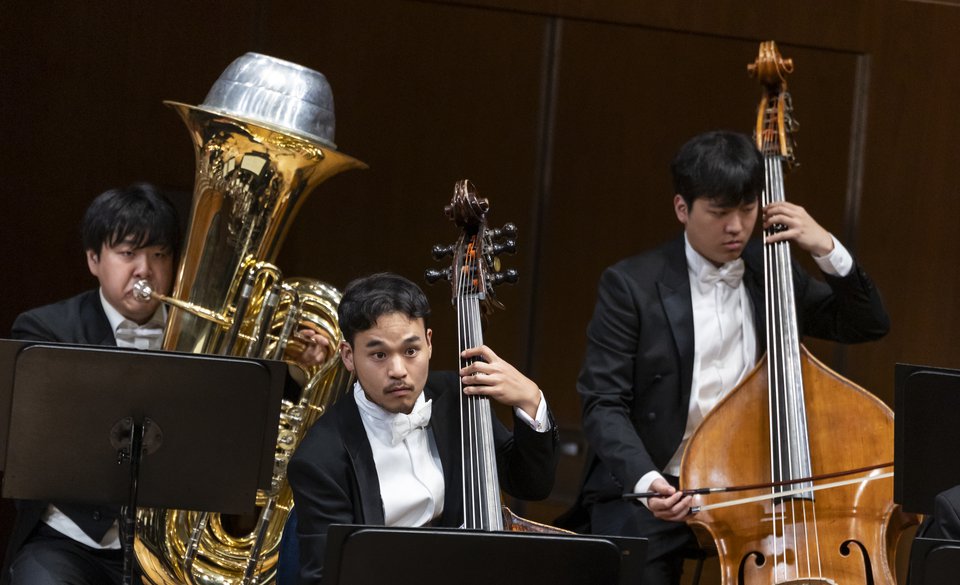
Completely focused – Jiwoo Ryu (right) with fellow double bassist Theo Lee and principal tuba player Yuki Takebayashi during their guest performance at the Lucerne Festival in September 2026 (c) Lucerne Festival
For violist Seonwoo Ryu, weekends in Berlin involve “relaxing at home, going to cozy cafés, and taking walks in quiet parks.” The musician from Korea first came into contact with the viola as a child: “My teacher used to live in the same building back then. The warm sound of the viola, which reminds me of a human voice, and its beautiful role in the orchestra fascinated me—and that’s why I still play it today.” Seonwoo’s favorite composer is Johannes Brahms: “I love his music, which is warm and yet somewhat melancholic—sometimes it almost hurts, and yet it’s beautiful.”
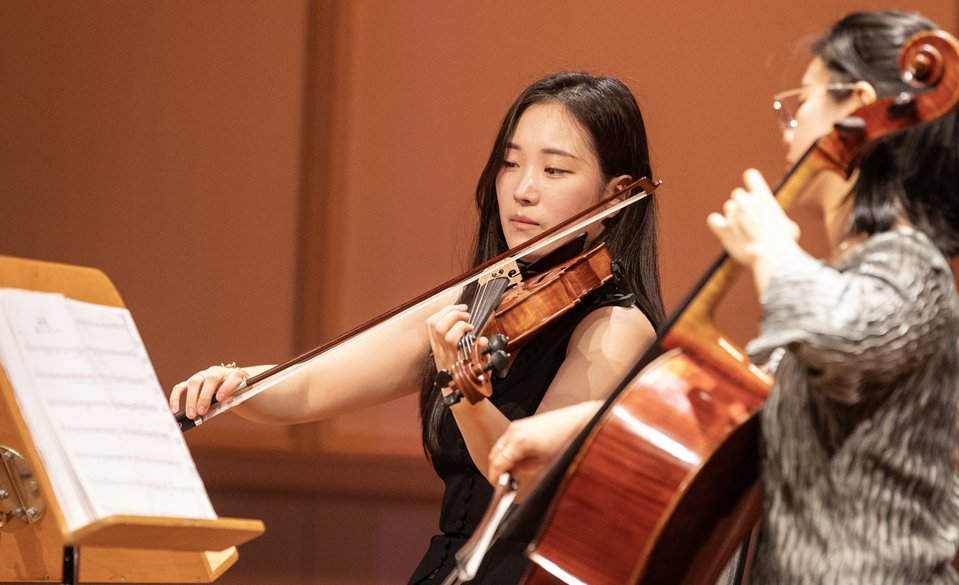
At the open house in Oktober 2026, Seonwoo Ryu plays film music with a string quartet of the Academy (c) Pablo Castagnola
For percussionist Mariia Shmeleva, the “best plan for the weekend” in Berlin involves “wandering around flea markets, eating delicious food, working out, and just hanging out with friends.” Among composers, she considers Bach “truly incomparable”, but the musician from St. Petersburg also admires Tchaikovsky, Shostakovich, and Mahler. She could easily imagine playing a brass instrument like the trombone or French horn, “or the cello!” Instead of music, in another life she might have turned her athletic passions into a career—horseback riding or figure skating. Her favorite foods are Peruvian ceviche and all kinds of seafood.
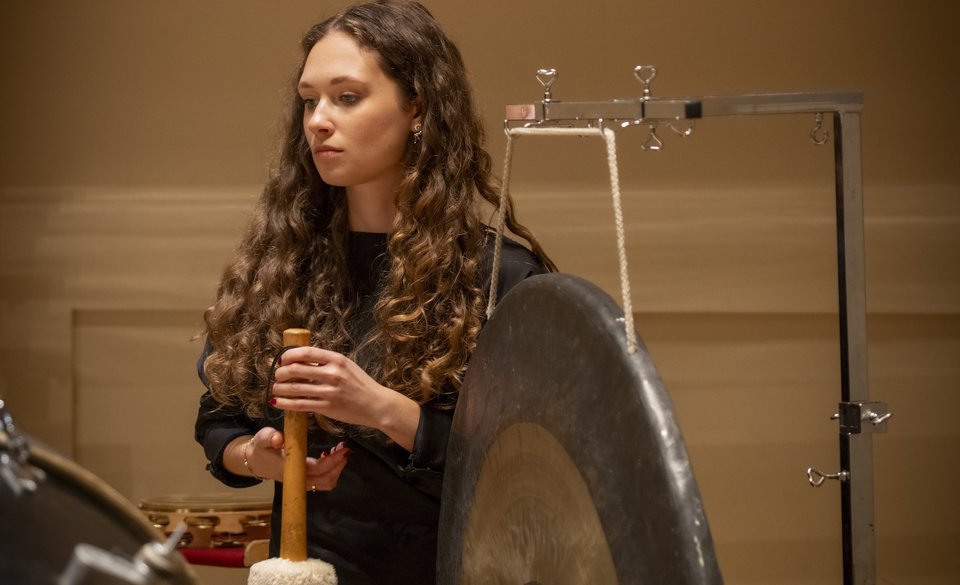
Mariia Shmeleva in a KHO rehearsal in early October 2026 (c) Marco Borggreve
Flutist Alma Sonenshtain first listened to her instrument at a children’s concert. That’s when she knew: I want to be able to play that, too! Aside from the flute, she particularly appreciates the cello: “It would be nice to play a lower-pitched instrument for a change. Besides, there’s a wonderful repertoire of solo and chamber music for the cello.” Alma’s favourite composer is Gustav Mahler: “His symphonies really made me fall in love with classical music when I was younger.” The musician from Tel Aviv loves coffee and Japanese cuisine.
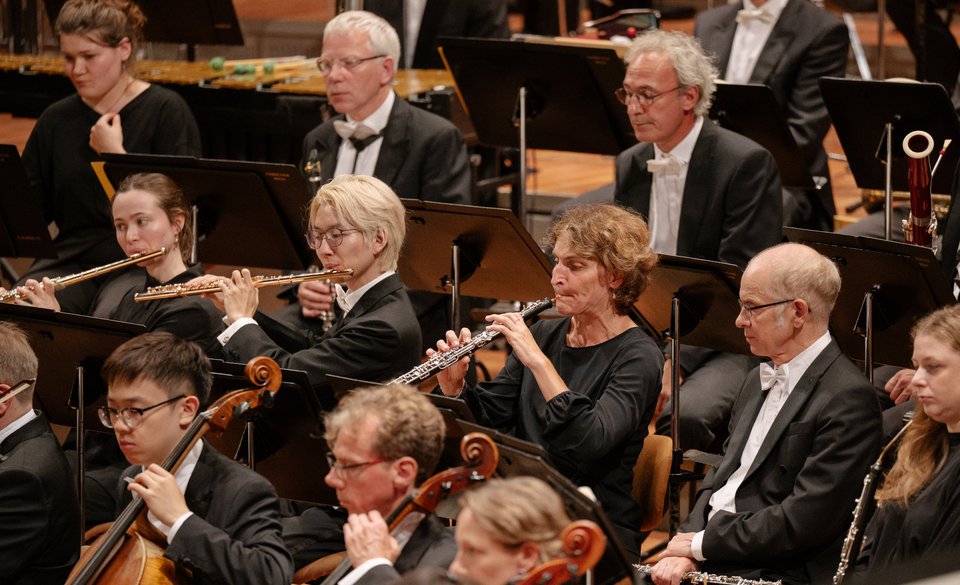
Right in the thick of it—Alma Sonenshtain plays 2nd flute at the Musikfest Berlin at the Philharmonie on September 4, 2026. (c) Simon Pauly
Practicing and relaxing at home are important to violinist Salma Sorour on her Berlin weekends: “I enjoy having some quiet time to myself then.” The musician from Cairo really likes Berlin, “but I haven’t explored the city enough yet to have a favourite spot. Since I like company, I’d say: Anywhere that’s lively could be a place I’d enjoy!” ”
Salma comes from a family of musicians. “My two older siblings also play the violin, so my parents probably thought, ‘Why not?’” she laughs. In an alternate life, she’d be an athlete, “probably a gymnast. It looks cool and challenging—definitely up my alley!” Salma’s favorite meal is an Egyptian dish called molokhya.
In Berlin, violinist Leyang Tang loves exploring the Museumsinsel : “the whole place has an aura that takes you on a journey back in time.”
The violin has been a part of her life even before she was born: “My mother is a violin teacher. When I was kid – or even when still in her belly – I got to listen to music a lot. At some point, I started to use chopsticks to imitate playing the violin and asked her to teach me. That’s how it began.” Leyang also loves the cello—that would “definitely” be her choice if she could play another instrument. The musician from China used to dance a lot and might have been a dancer in another life—“or an actress; I’d love to try that sometime.”
Violist Joon Hurh likes to relax at home on weekends—his cat keeps him company. When he was a little boy, his parents thought that learning an instrument would be good for him. He started with the violin: “At first, it was very difficult to produce a beautiful sound. I decided to take on the challenge and kept playing. But I was very dissatisfied.” That changed when he switched to the viola at the age of 17. The British musician had fallen in love with its sound at a concert: “To this day, I'm glad I chose this path.”
His favourite composer is Robert Schumann. In another life, he might have played the cello or saxophone. Joon is happy that his profession allows him to “do something I love.” An alternative job would have to pay well, because he likes to buy “beautiful things.” Since he also enjoys trying out new violas and bows from different violin makers, he could well imagine collecting bows. Joon's favourite food is Korean.
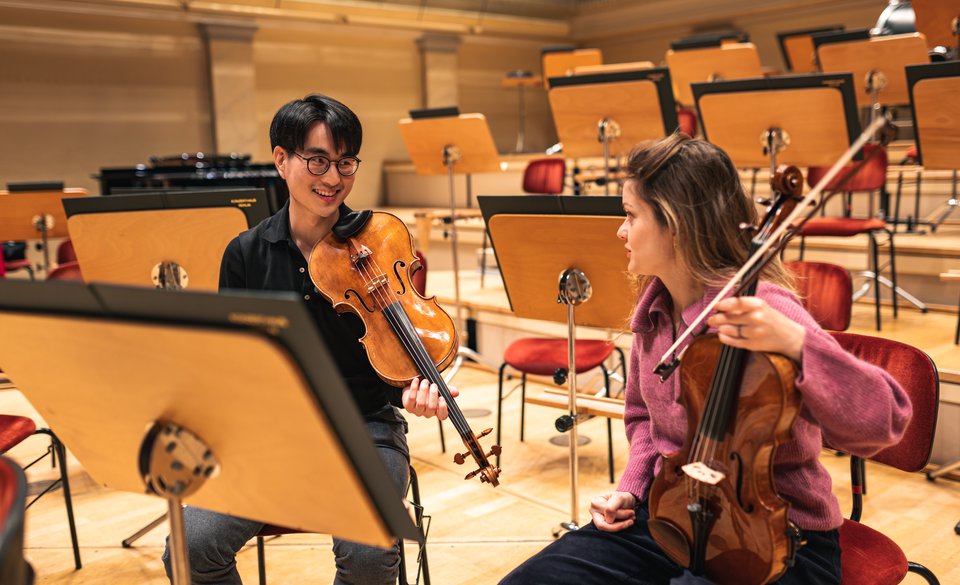
Joon Hurh in conversation with his mentor, Nilay Özdemir in spring 2026 (c) Andreas Antoni
When he's not playing himself at the weekend, violinist Johannes Tentschert loves going to concerts: “Berlin's cultural and orchestral scene is so diverse that there are always interesting, high-quality concerts right on your doorstep.” Even as a child, he was fascinated by Gustav Mahler's symphonies ““ecause of the intoxicating sound of an orchestra.” The composer remains his favourite to this day. Because of the “harmonic possibilities and wonderful repertoire,” the violinist would also enjoy being a pianist.
As a big sports fan, especially soccer, he might have realized his childhood dream of becoming a sports reporter in another life.
Johannes loves “pretty much everything Italian cuisine has to offer” on his plate. At the top of the list: lasagna!
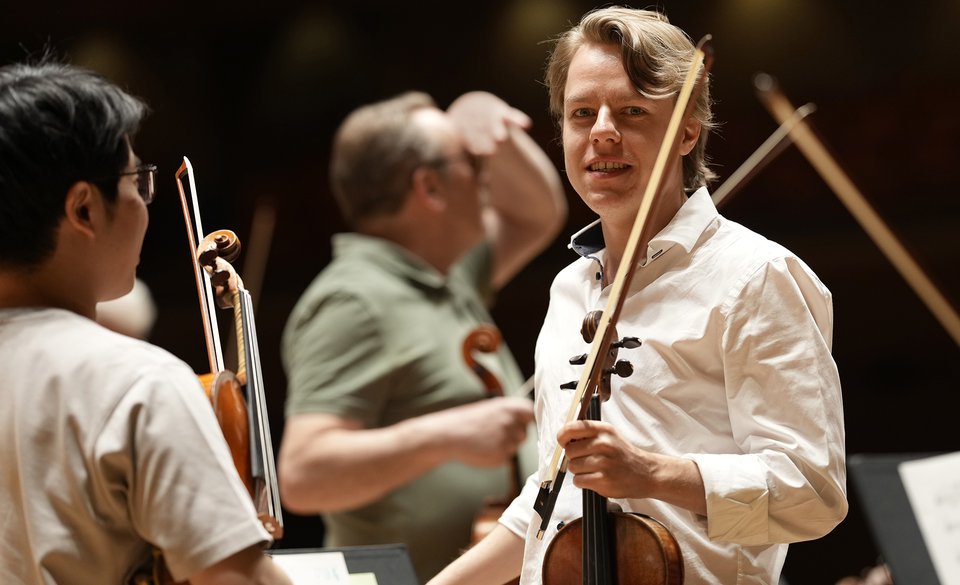
Johannes Tentschert at the KHO Spring Tour 2026 before the rehearsal in Linz (c) Reinhard Winkler
Cellist Yu-Ju Yen comes from Taiwan. As a newcomer to Berlin, she likes to explore different neighbourhoods on the weekend to discover cafés. Of course, she also tries to practice a little. Yu-Ju remembers that as a little girl, she actually liked the horn, but her mother convinced her to learn the cello: “She probably thought that one wind or brass instrument in the family was enough, since my older sister already played the oboe.”
Johann Sebastian Bach is currently the cellist's favourite composer. Even today, the horn would still be her favourite alternative among the instruments: “To be honest, I would choose any of the brass instruments – a waterproof instrument is just so much cooler!”
Yu-Ju has been thinking a lot lately about what she would do in life if she weren't a musician: “I might try my best to get into medical school and become a gynecologist. Or I would invest in a small organic veggie/farm business.”
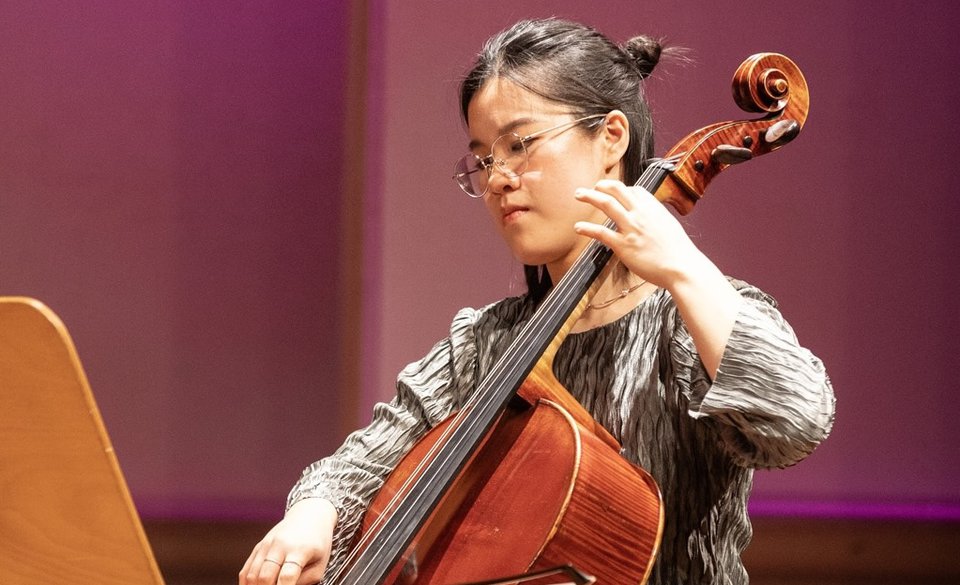
At the open house in Oktober 2026, Yu-Ju Yen plays film music with a string quartet of the Academy (c) Pablo Castagnola
Cellist Xiaotang Xu from China has also been a member of the Kurt Sanderling Academy since last season.
Koffein für die Ohren – mit Mitgliedern der Kurt-Sanderling-Akademie des Konzerthausorchesters Berlin

Koffein für die Ohren – mit Mitgliedern der Kurt-Sanderling-Akademie des Konzerthausorchesters Berlin
Koffein für die Ohren – mit Mitgliedern der Kurt-Sanderling-Akademie des Konzerthausorchesters Berlin